Implementing Eco-Friendly & Sustainable Event Practices

Green Event Management: A Practical Guide to Eco‑Friendly, Sustainable Events
Running a sustainable event means planning and producing gatherings that cut environmental harm while still delivering great guest experiences and measurable social benefits. This guide breaks down realistic steps for reducing waste, lowering carbon emissions, sourcing locally, and weaving corporate social responsibility into your event program so planners and hosts can reach concrete sustainability goals. If you want hands-on help, Let’s Groove Events in Jersey City offers Sustainable Event Planning and Production services that combine logistics, vendor coordination, and eco-conscious design for weddings and corporate events — request a consultation via the email or phone below. Many planners struggle with fragmented advice on measurement and implementation; this article lays out clear principles, practical tactics, and quick-reference tables to move ideas from ambition to action. Read on for core principles, eco-design tips, carbon-reduction strategies, and CSR approaches you can use right away to stage greener, more resilient events.
What Are the Key Principles of Sustainable Event Planning?
Sustainable event planning focuses on cutting resource use, choosing reuse over single-use, sourcing locally, and creating benefits for the community — all while improving the attendee experience. These principles shift procurement, logistics, and onsite operations toward lower-emission, lower-waste decisions and produce measurable results like higher waste-diversion rates and fewer travel emissions. Below are practical principles that form the backbone of any green event program and help guide venue selection, vendor choices, and attendee communications. Adopting them early in the planning process makes the operative tactics much easier to execute later.
Sustainable event planning rests on a few core principles:
- Reduce, Reuse, Recycle: Cut material use, opt for reusable assets, and provide clear recycling and composting stations.
- Local Sourcing: Choose nearby food and services to shrink transport emissions and support the local economy.
- Energy Efficiency: Specify low-energy lighting, manage HVAC runtimes, and control on-site power to reduce consumption.
- Inclusive CSR: Build social impact through local hiring, donations, and community partnerships.
The short comparison below highlights typical tactics and outcomes tied to each principle before we dive into specific waste-management and sourcing practices.
Different sustainability principles call for different tactics and yield measurable results.
| Principle | Typical Tactics | Example Outcome |
|---|---|---|
| Waste Reduction | Waste audits, eliminate single-use, composting stations | 50–70% diversion from landfill |
| Local Sourcing | Seasonal menus, local vendor lists, contract clauses | 20–50% lower transport emissions |
| Energy Efficiency | LED lighting, timed systems, vendor load management | 20–40% energy reduction |
| CSR Integration | Local hires, donation programs, volunteer coordination | Tangible local economic benefits |
With those principle-level tactics in mind, next we’ll look at how zero-waste practices and local sourcing work in real events.
How Does Zero Waste Event Management Reduce Environmental Impact?
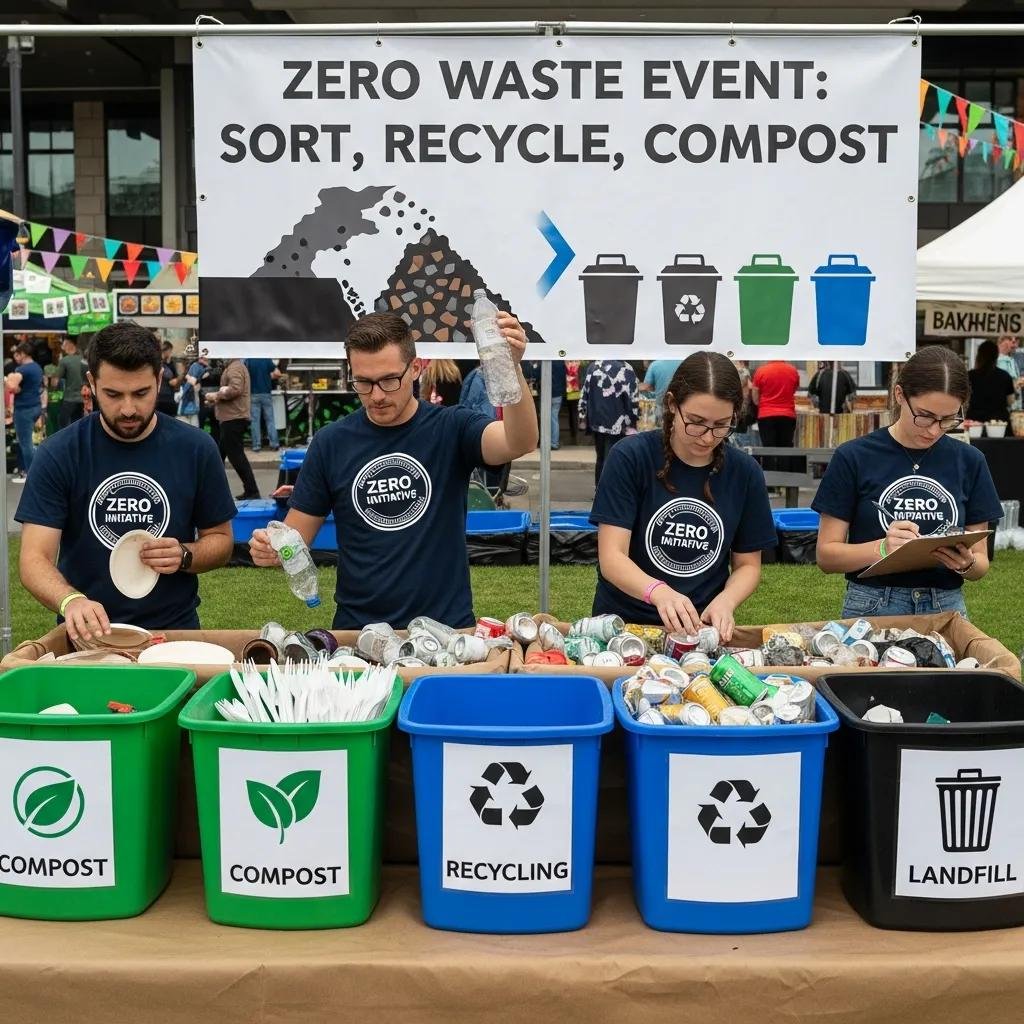
Zero-waste event management starts by preventing waste through audit-driven planning, then diverts unavoidable materials to recycling or compost streams. A waste audit pinpoints high-volume items — usually single-use foodservice wares and printed materials — so you can prioritize reusable dishware, digital signage, or other swaps. Operational tactics include clearly signed waste stations, vendor contracts that require compostable packaging, and staff training to ensure proper sorting; these steps typically boost diversion rates and lower disposal costs. Tracking diversion percentages and vendor compliance closes the loop and gives you the data needed for continuous improvement.
Why Is Local Sourcing Essential for Eco-Friendly Events?

Sourcing locally cuts transportation emissions and builds community ties by prioritizing nearby growers, caterers, and suppliers — which usually improves food freshness and guest satisfaction. Operationalizing local sourcing starts with a vetted vendor list and seasonal menus that match available produce, plus procurement clauses that request origin transparency. Benefits include shorter delivery distances, lower food miles, and economic support for local businesses; tracking percent of spend that goes local is a simple KPI. These procurement changes often reveal additional sustainability wins like reduced packaging and fresher culinary options that elevate the guest experience.
How Can You Integrate Eco-Friendly Design and Decor in Events?
Eco-friendly design and decor cut lifecycle impacts by favoring reusable, upcycled, or biodegradable materials while keeping the look and function you want. Choices like rented furniture, reusable fabric draping, and upcycled centerpieces lower embodied emissions compared with single-use decor, and they can save money over several events. Think through material lifecycles when specifying decor and coordinate with vendors on collection and reuse so end-of-life handling matches your sustainability goals. These tactics naturally tie into vendor management and the design services professional planners provide.
Event designers can promote sustainable decor using this quick comparison of material approaches.
| Decor Approach | Material/Approach | Environmental Benefit |
|---|---|---|
| Reusable Rentals | Rented furniture, fabric drape systems | Reduces repeated manufacturing impact |
| Biodegradable Options | Bamboo tableware, compostable signage | Breaks down without landfill persistence |
| Upcycled Elements | Repurposed containers, vintage props | Extends existing materials’ lifecycle |
Mixing these approaches keeps creative freedom intact while reducing emissions and waste. Below are practical decor options and what they mean operationally.
Here are actionable options for sustainable decor and their operational implications:
- Choose rental furniture and modular staging to cut single‑use purchases and benefit from scale efficiencies.
- Prioritize biodegradable tabletop items where reusables aren’t feasible so materials can compost safely.
- Design with upcycled and locally made elements to create memorable looks with lower embedded emissions.
These decor choices lead directly into why reusable and biodegradable materials matter and how efficient lighting supports overall sustainability.
What Are the Benefits of Using Reusable and Biodegradable Materials?
Reusable and biodegradable materials shrink total waste, reduce purchasing frequency, and strengthen a brand’s sustainability story. Reusable assets like rented linens and furniture form an inventory that pays off across many events, often proving cheaper over time than constant single-use buys. Biodegradable items — bamboo serveware, compostable signage — are a practical fallback when reusables aren’t possible, but they need proper composting streams to deliver environmental benefits. Vendor agreements should include return, cleaning, and end-of-life requirements so these gains are realized in practice.
How Does Energy-Efficient Lighting Enhance Sustainable Event Design?
Energy-efficient lighting — primarily LEDs paired with zoned controls and timers — delivers sizable power savings without sacrificing ambiance. Modern LED fixtures can recreate warm hospitality lighting, and combining dimmers, motion sensors for back-of-house areas, and scheduled lighting reduces run hours and demand peaks, cutting energy costs and related emissions. Layer ambient and task lighting to get the desired effect with lower wattage, and consider rechargeable battery fixtures for temporary setups to avoid generator use. Estimating energy savings in advance helps show stakeholders clear ROI and environmental impact reductions.
What Strategies Support Carbon Footprint Reduction in Events?
Cutting an event’s carbon footprint starts with measurement, followed by reduction measures for travel, energy, and catering, and ends with credible offsets for any remaining emissions. Measurement means estimating travel-related emissions, onsite energy use, and supply-chain impacts to create a baseline and prioritize actions. Reduction tactics include choosing accessible venues, promoting sustainable transport, improving onsite energy efficiency, and selecting low-carbon menus; vetted offsets can neutralize unavoidable emissions. Together, these steps create a practical path to measurable reductions and verifiable claims for stakeholders.
To make decisions actionable, compare common interventions and their typical impact.
| Action | Strategy | Estimated Impact |
|---|---|---|
| Sustainable Transport | Shuttles, transit incentives, EV charging | 10–30% travel emission reduction |
| Energy Efficiency | LED, timed HVAC, generator minimization | 15–40% onsite energy cut |
| Virtual/Hybrid Options | Remote attendance, reduced capacity | Significant travel emission avoidance |
Putting these strategies into practice requires coordination among vendors and logistics teams — an area where professional event production support adds value.
Key steps to reduce and manage event emissions:
- Measure: Run an emissions inventory that covers travel, energy, and materials.
- Reduce: Prioritize low-carbon venues, efficient systems, and sustainable catering choices.
- Offset: Work with vetted carbon-offset programs to neutralize remaining emissions.
These steps feed into decisions about offsets and transportation planning covered in the next sections.
How Do Carbon Offsetting and Green Transportation Contribute to Sustainability?
Carbon offsets balance emissions that can’t be eliminated by funding verified mitigation projects, while green transportation tackles the largest event emission source: attendee travel. Choose offsets that meet strong verification standards, demonstrate permanence, and show additionality to ensure real climate benefits. Transportation plans should include shuttles, transit incentives, ride-share coordination, and on-site EV charging. Track travel emissions per attendee and monitor modal shifts driven by your incentives. Pairing targeted offsets with solid transport planning produces measurable, sharable reductions in total event emissions.
What Role Do Hybrid and Virtual Events Play in Reducing Emissions?
Hybrid and virtual formats reduce emissions mainly by cutting travel and venue resource use, while also increasing accessibility. Technical choices — platform, production quality, bandwidth — must be weighed against carbon savings and engagement goals. Best practices include designing parallel agendas for in-person and remote participants, investing in quality AV to preserve perceived value, and tracking virtual attendance to estimate avoided travel emissions. When done intentionally, hybrid formats can deliver most of an event’s value at a fraction of the traditional carbon footprint.
How Does Corporate Social Responsibility Enhance Sustainable Event Practices?
Corporate social responsibility (CSR) strengthens sustainability by aligning environmental targets with social outcomes, improving brand reputation, and creating measurable local impact. CSR can include fair vendor selection, community partnerships, local hiring, and donation or volunteer components — all of which boost an event’s net positive effect beyond environmental metrics. Embedding CSR requires clear goals, stakeholder engagement, and KPIs that capture social and economic as well as environmental outcomes. These efforts build long-term trust and often unlock resources and partnerships for future events.
Practical CSR actions often focus on vendor standards and community engagement.
- Vendor standards: Require transparency on sourcing, labor practices, and waste handling.
- Community programs: Partner with local nonprofits for donation drives or volunteer shifts.
- Local hiring: Prioritize staffing from the host community to maximize economic benefit.
These CSR approaches tie directly into vendor management and community engagement tactics discussed below.
Why Is Ethical Vendor Management Important for Green Events?
Ethical vendor management makes sure suppliers meet sustainability criteria through clear vetting, contract language, and reporting requirements, preserving standards across the supply chain. A practical vendor checklist covers origin of goods, waste-handling practices, labor conditions, and evidence of environmental policies; contracts can require compostable packaging, return logistics, and regular reporting. Building a preferred vendor network with documented requirements simplifies procurement and drives consistent results, while periodic audits keep everyone accountable. These practices help translate event sustainability goals into measurable supplier performance.
How Can Community Engagement Strengthen Event Sustainability?
Community engagement strengthens sustainability by creating local economic benefits, securing social license, and generating volunteer and in-kind resources that lower costs and waste. Partnerships can include hiring local caterers, donating leftover food, organizing volunteer shifts with neighborhood groups, or co-designing program elements with community partners to ensure cultural fit. Measure impact with local spend, volunteer hours, and donation metrics to create concrete KPIs for CSR reporting and refine programs over time. Strong local ties also help with permitting, attendance, and long-term venue relationships.
For hands-on support applying these strategies, Let’s Groove Events provides sustainable event planning, vendor coordination, and eco-friendly design as part of our event production services and can help quantify impacts and manage logistics. To request a sustainable event consultation or quote, contact Let’s Groove Events by email at info@letsgrooveevents.com or by phone at +1 201-892-0181.
Frequently Asked Questions
What are some common challenges in implementing sustainable event practices?
Common challenges include limited access to eco-friendly vendors, higher upfront costs for sustainable materials, and gaps in staff or attendee awareness and training. Measuring impacts can also be tricky because it needs reliable data collection and analysis. Overcoming these barriers takes early planning, stakeholder buy‑in, and ongoing education to build a culture of sustainability within your team.
How can technology support sustainable event management?
Technology helps streamline sustainable event management by improving tracking and coordination. Event-management tools can monitor resources, manage vendor compliance, and analyze waste. Virtual platforms enable hybrid events that cut travel emissions, and attendee apps can promote carpooling or public transit. Used well, technology makes operations leaner and your sustainability efforts easier to measure and communicate.
What are the benefits of engaging local communities in event planning?
Engaging local communities fosters goodwill, improves cultural relevance, and channels economic support to nearby businesses. Local partners can supply volunteers, in-kind donations, and neighborhood insight that reduce costs and waste. Involving community members also helps your event resonate locally, boosts participation, and creates lasting relationships that benefit future events.
How can event planners measure the success of their sustainability initiatives?
Measure success with clear KPIs such as waste-diversion rates, carbon footprint reductions, percent-local sourcing, and attendee engagement in sustainable behaviors. Post-event surveys and feedback add qualitative insight. Set metrics before the event, collect data during the run, and perform a post-event evaluation so you can demonstrate results and identify improvements for next time.
What role does communication play in promoting sustainable events?
Clear communication is essential: it raises awareness and encourages attendees, vendors, and staff to act sustainably. Share your goals, explain what you’re doing and why, and give simple instructions for sorting waste or choosing transit. After the event, publish outcomes and success stories to build credibility and inspire further action.
Are there specific certifications or standards for sustainable events?
Yes. Standards like ISO 20121 provide a framework for sustainable event management, and other industry certifications — such as those from the Green Meeting Industry Council — help planners adopt best practices. Earning certifications can boost credibility, attract eco-conscious attendees, and signal to sponsors and partners that your event meets recognized sustainability benchmarks.
Conclusion
Sustainable event practices reduce environmental impact while improving guest experience and supporting local communities. By prioritizing waste reduction, local sourcing, and energy efficiency, planners can achieve measurable benefits that matter to attendees and stakeholders. If you’re ready to take your event greener, professional support can make the process smoother — contact Let’s Groove Events to start planning a more responsible, memorable event.