Exploring Rich Indian Wedding Traditions
Indian Wedding Planner Services: A Practical Guide to Honoring Rich Traditions and Planning Seamless Celebrations
Indian weddings are vibrant, multi-day celebrations where ritual, family, music, food, and design come together to create an immersive experience. This guide breaks down core traditions and shows how planners translate ritual meaning into logistics, decor, and vendor coordination so couples can enjoy authentic, low-stress celebrations. You’ll find clear explanations of ceremonies like Mehndi, Sangeet, Haldi, Baraat, and Saptapadi, see how those events shape a multi-day timeline, get decor ideas that honor tradition while reflecting personal style, and learn which planner services make everything run smoothly. Common planning challenges—sequencing rituals, coordinating priests and vendors, and maintaining cultural integrity across venues—are solved with thoughtful timelines and experienced vendor management. Below we map ceremonies to planner responsibilities, highlight decor strategies and sustainable trends for 2025, and outline the core services that preserve ritual meaning while delivering beautiful, reliable events.
Celebrating Rich Indian Wedding Traditions: A Planner's Guide
Traditional Indian wedding ceremonies form a sequence of ritual events that mark transitions in family life and convey deep cultural meaning. Each ritual blends symbolic acts, music, and communal participation; understanding them lets planners set realistic time blocks, secure the right vendors, and design sacred spaces that honor the rites. These ceremonies create the emotional rhythm of a multi-day wedding and establish natural moments for photography, blessings, and family roles—reducing confusion and helping guests feel guided. Below is a concise list with short definitions you can use as a planning checklist.
The major ceremonies and quick definitions:
- Mehndi: A pre-wedding gathering where henna is applied to the bride and guests—an intimate ritual of beauty, blessing, and community celebration.
- Sangeet: An evening of music, dance, and performances that brings both families together and builds celebratory energy before the main ceremony.
- Haldi: A morning purification ritual where turmeric paste is applied for blessing and a radiant glow ahead of the wedding.
- Baraat: The groom’s lively procession to the venue—an exuberant arrival that honors family, music, and tradition.
- Main Ceremony / Saptapadi: The formal wedding rites centered around the sacred fire, including the seven steps (Saptapadi) that seal the couple’s vows and partnership.
These definitions map to practical planner tasks—booking henna artists, scheduling Sangeet rehearsals, timing Haldi so hair and outfits aren’t disrupted, planning Baraat routing, and coordinating with priests for Saptapadi. When planners understand each ritual’s meaning, they can set accurate windows for ceremonies, sound needs, and seating for elders before finalizing decor and production plans.
How Does the Mehndi Ceremony Celebrate Cultural Heritage?
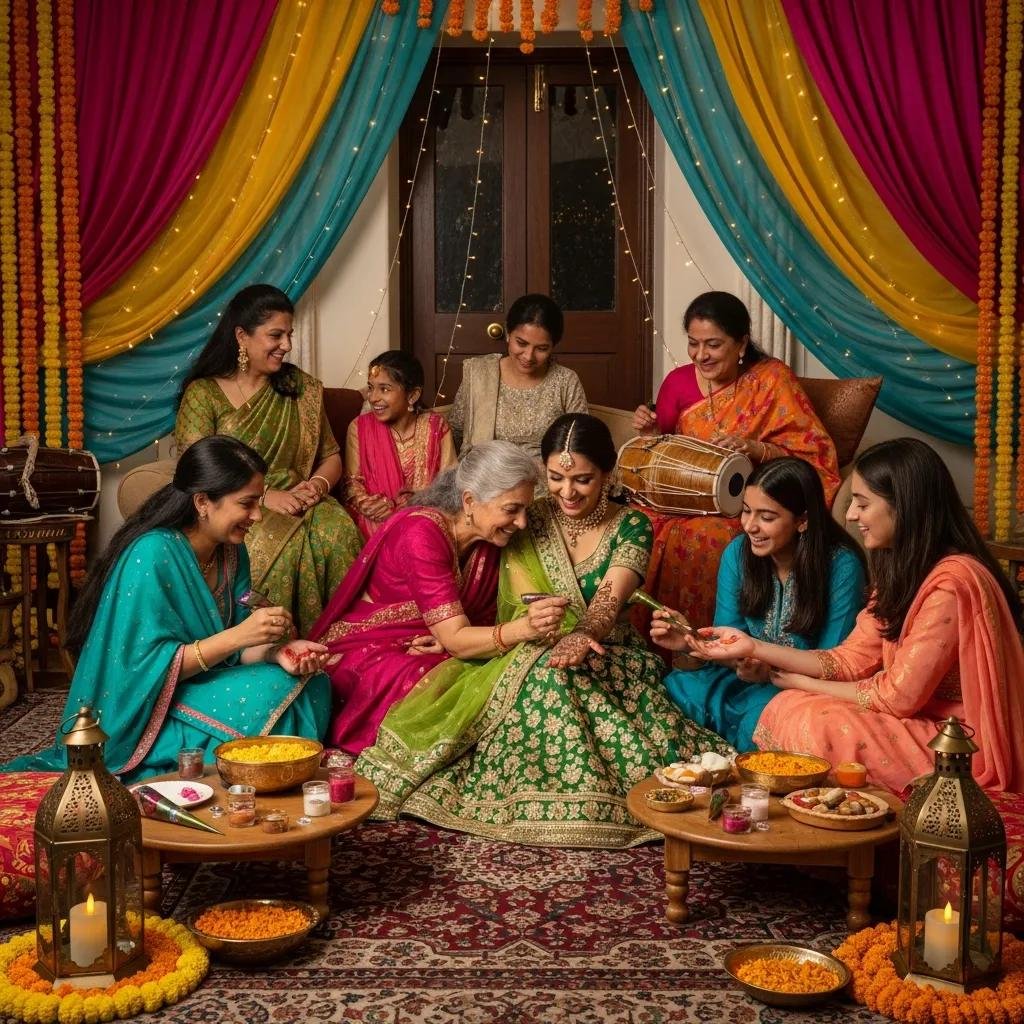
Mehndi celebrates heritage through communal henna, music, and intimate rituals that honor female kinship and traditional artistry. Usually held one or two days before the wedding, Mehndi symbolizes luck and protection and creates a relaxed, joyful environment for close family and friends. From a planner’s perspective, key tasks include hiring experienced henna artists, arranging comfortable seating pods, creating scheduled time blocks for guests, and choosing stain-friendly decor and lighting that flatters photos. A straightforward timeline—guest arrival, henna stations, ceremonial songs, and refreshments—keeps ritual flow natural while maximizing engagement and picture moments.
That focus on craft and social bonding naturally leads into the Saptapadi and the main ceremony, where vows are formalized in the mandap.
What Are the Rituals and Meaning Behind the Saptapadi Vows?
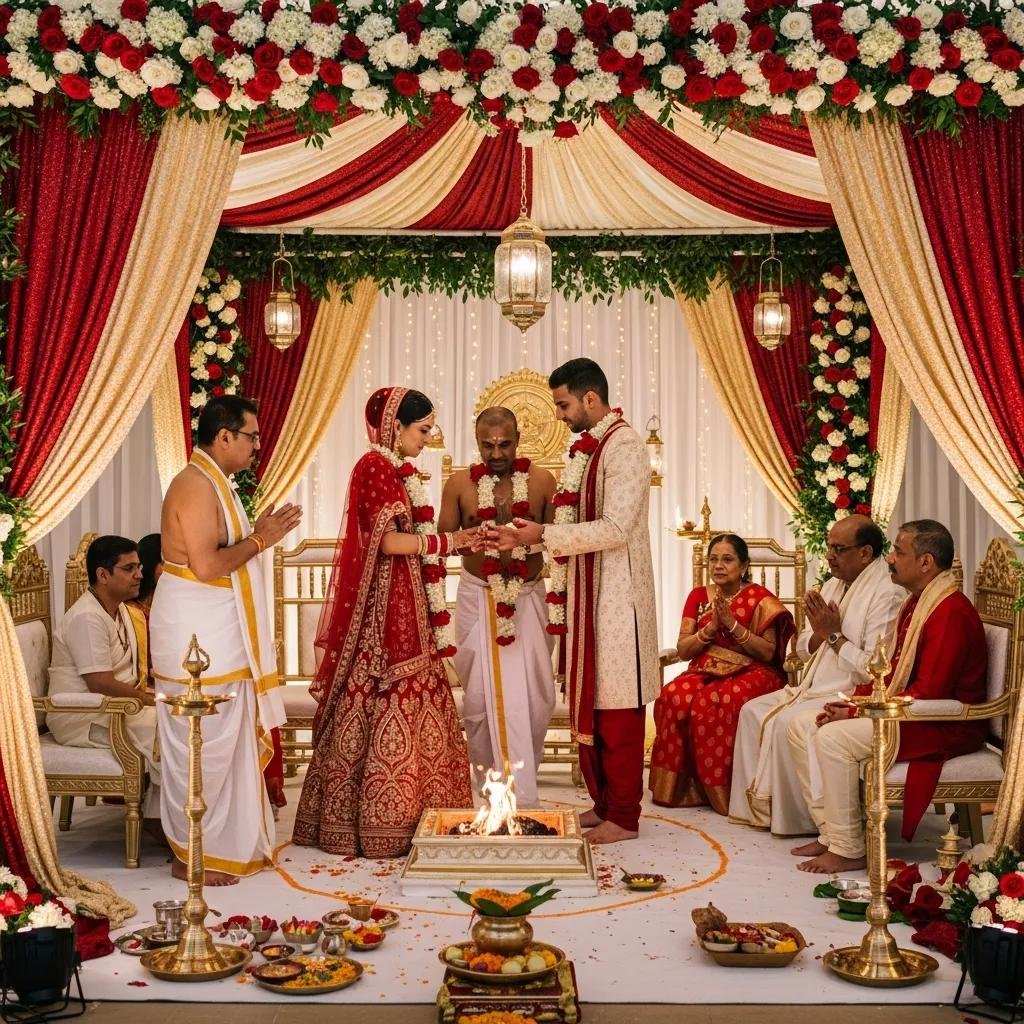
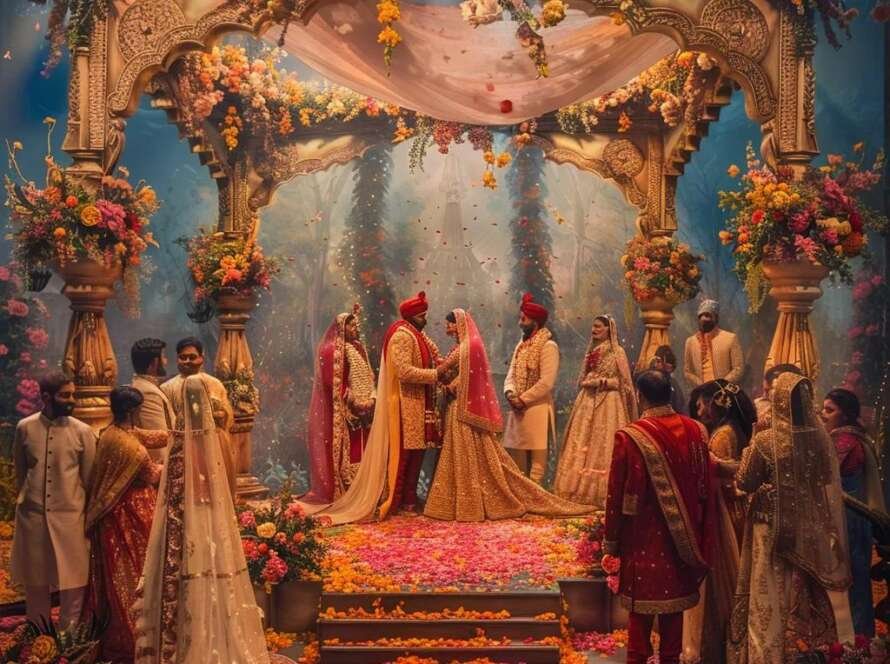
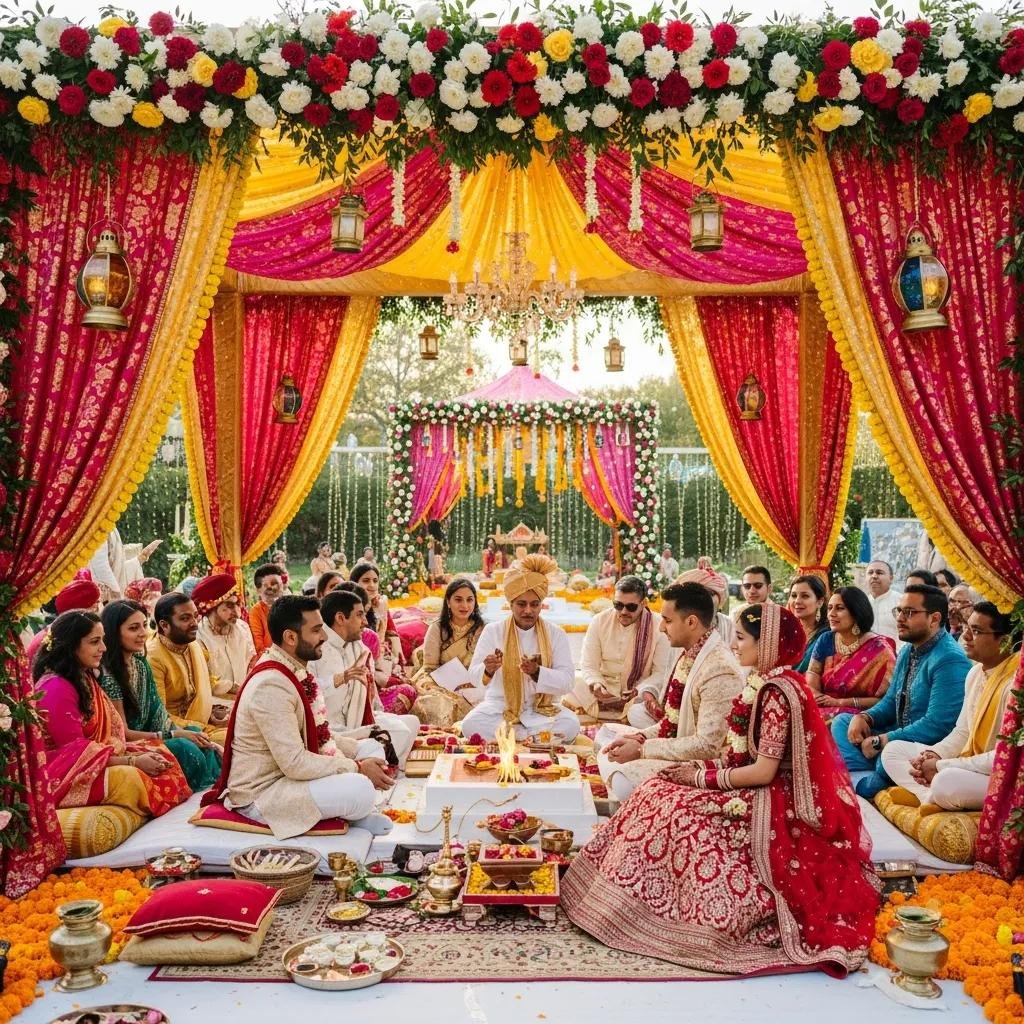
Saptapadi—the “seven steps”—are seven ritual steps the couple takes around the sacred fire, each step representing a vow: life, nourishment, strength, prosperity, children, health, and companionship. The ceremony links spiritual symbolism to concrete commitments and is typically led by a priest chanting mantras as the couple walks. Planners coordinate mandap layout, priest timing, elder seating, and cue sheets for musicians and photographers to preserve sightlines and ritual sanctity. Because regional wording and small rituals vary, confirming language and sequence with the priest and family ahead of time is essential for accuracy and respect.
How Do Desi Wedding Rituals Shape the Multi-Day Celebration Experience?
Desi wedding rituals create a multi-day narrative arc that guides guest energy, vendor sequencing, and logistical flows across venues and times. Energetic events like Baraat and Sangeet are often scheduled earlier to build momentum, with reflective ceremonies like Saptapadi at the heart of the timeline. Planners translate that arc into detailed itineraries for transport, lodging, and vendor handoffs. Balancing ritual integrity with guest comfort means adding buffer windows for processions, staggering start times, and communicating attire and arrival expectations clearly. Below is a practical template planners use to map responsibilities and vendor windows for a multi-day celebration.
Typical multi-day sequence and planner tasks:
- Day -2 / Mehndi & Welcome: Arrange henna artists, lounge seating, and arrival logistics for immediate family.
- Day -1 / Sangeet & Rehearsal: Coordinate stage design, soundchecks, performer schedules, and run-throughs.
- Wedding Day / Haldi + Baraat + Ceremony: Manage procession routing, transport, mandap setup, priest scheduling, and guest ushering.
- Post-Wedding / Reception & Ritual Wrap: Oversee catering transitions, farewell logistics, and vendor strike.
These steps serve as a roadmap for vendor coordination, guest flow, and cultural fidelity while allowing flexibility for regional customs and destination constraints. The next sections dive deeper into Baraat coordination and mandap design logistics that planners operationalize on the day.
This table maps rituals to timing, participants, planner responsibilities, and recommended vendors.
| Ritual | Typical Timing & Key Participants | Planner Responsibilities & Suggested Vendors |
|---|---|---|
| Mehndi | 1–2 days before; bride, close family, guests | Hire henna artists, set up seating zones, provide light refreshments; henna artists, caterer |
| Sangeet | Night before; both families, performers | Design stage, manage sound and lighting, schedule choreography rehearsals; DJ, band, AV vendor |
| Haldi | Morning of wedding day; immediate family | Plan a short ceremony window, use stain-friendly seating, capture photos; florist, photographer |
| Baraat | Wedding day arrival; groom party | Secure route permits, coordinate music, stage arrivals, manage crowd safety; transport, DJ |
| Main Ceremony / Saptapadi | Wedding day; priest, elders | Construct mandap, liaise with priest, supply ritual props, arrange elder seating; priest, mandap builder |
Summary: Turning rituals into an operational table clarifies vendor bookings and timing windows, cuts last-minute friction, and preserves ceremony authenticity.
What Is the Role of the Baraat Procession in Indian Weddings?
The Baraat is a jubilant procession announcing the groom’s arrival—often full of music, dancing, and a lively entourage. Culturally, it publicly honors the groom and creates a vivid, photo-ready contrast with the ceremony’s formality. From an operations viewpoint, planners handle arrival staging, route permits for public processions, crowd-control and security, transport logistics, and synchronization with venue entry times. A short Baraat checklist—route confirmation, sound cueing, safety measures, and arrival staging—keeps arrivals safe, on time, and easy to transition into the mandap or reception.
Planning the Baraat connects directly to mandap design, since the mandap must accommodate arrival flow and the sacred activities that follow.
How Is the Mandap Designed and Decorated for the Sacred Ceremony?
The mandap is a four-pillared ceremonial canopy that frames the altar and supports clear sightlines for priests, family, and photographers. Traditional elements include sturdy pillars, a fire altar, floral garlands, and seating for elders; modern mandaps often use lighter materials, integrated lighting, and photo-friendly backdrops while preserving ritual access. Planners coordinate structural safety, load-bearing needs for lighting and decor, vendor access for timely installs, and a layout that leaves photographers and videographers unobstructed. Cultural details—directional orientation, priest access to the fire, and clear family seating—should guide design choices and vendor briefs.
Before moving on to decor ideas, review the mandap vendor responsibilities noted in the table above to confirm who’s in charge of build and ritual props.
What Are Indian Wedding Decor Ideas That Reflect Tradition and Personal Style?
Decor that honors tradition while reflecting personal style balances symbolic staples with couple-specific accents to create meaningful, photo-ready settings. Traditional staples include marigold garlands, draping, brassware, rangoli, and ornate textiles; personal touches show up in color palettes, monograms, fusion elements, and sustainable material choices. Effective plans assign palettes by event—yellows for Mehndi, jewel tones for Sangeet, and classic red and gold for the ceremony—while allowing modern details like bespoke backdrops and eco-friendly installations. Below are practical decor ideas and a comparison to help couples choose options that match budget and aesthetic goals.
Common decor ideas and quick applications:
- Marigold garlands and floral strings for authentic color, scent, and ritual use.
- Draped fabrics and layered backdrops to create photographic focal points and frame the mandap.
- Brass lamps, rangoli, and traditional props to anchor ritual authenticity within modern design schemes.
Intro to table: The following comparison shows how decor elements are used traditionally and in modern setups, plus suggested applications and budget ranges.
| Decor Element | Traditional vs Modern Use | Suggested Application & Budget Range |
|---|---|---|
| Marigold Garland | Traditional staple vs suspended modern installations | Use for ceremony arches or photo walls; budget-friendly to mid-range |
| Draped Fabrics | Ritual draping vs luxe layered backdrops | Mandap drapes, lounge areas; mid-range to premium |
| Floral Chandeliers | Less traditional, modern luxe statement | Highlight Sangeet and reception focal points; premium |
| Brassware & Diyas | Ritual props vs styled accents | Use on altars and aisles; low to mid-range |
Summary: This comparison helps couples and planners select decor that supports ritual needs, visual cohesion, and budget—while embracing modern trends like sustainability and micro-luxury details.
Which Floral and Lighting Elements Enhance Traditional Indian Wedding Decor?
Floral choices and lighting shape the mood and ritual clarity of each wedding moment. Marigolds, jasmine, and roses are symbolic, durable, and photograph well; warm lighting—string lights, lanterns, and focused mandap spotlights—flatters skin tones and highlights movement without competing with priestly chants or firelight. Planners coordinate seasonal sourcing, choose hardy stems for outdoor heat, and set dimming cues for photography during ritual highlights. Clear alt text and staging notes for photographers ensure floral and lighting choices deliver a consistent visual narrative across events.
These staging details make it easier to blend personalized decor with ritual requirements while keeping visuals cohesive from Mehndi through the reception.
How Does Personalized Decor Blend Modern Trends with Cultural Rituals?
Personalized decor pairs modern trends—monograms, curated color stories, and sustainable materials—with ritual necessities by introducing custom elements that respect ceremonial form. Examples include mandap backdrops with family motifs, eco-friendly aisle markers made from recycled textiles, or fusion lounges that nod to traditional dress while offering contemporary comfort. For 2025, sustainable ideas—reusable stage elements, potted plants in place of cut flowers, and locally sourced textiles—cut waste without sacrificing elegance. Early vendor collaboration is crucial: share ritual constraints, reference images, and material preferences so designs photograph beautifully and support sacred acts.
A short services note: Let’s Groove Events provides decor, floral, and lighting services and works with vetted vendors and production teams to install designs on schedule and in keeping with ritual timetables.
Intro to EAV table: Below is a quick comparison of common decor choices, their traditional versus modern use, and suggested applications with budget signals.
| Decor Element | Traditional vs Modern Use | Suggested Application & Budget |
|---|---|---|
| Marigold Garland | Traditional ceremony garland vs suspended modern art | Archways, photo walls; low–mid |
| Floral Chandeliers | Rare traditionally vs popular modern statement | Reception focal point; high |
| Draped Fabrics | Ritual draping vs layered luxury backdrops | Mandap and lounge areas; mid–high |
Summary: Balancing traditional and modern decor keeps ritual integrity intact while reflecting a couple’s style and budget.
How Does Cultural Wedding Event Management Ensure Seamless Indian Wedding Planning?
Cultural wedding event management brings ritual coordination, vendor oversight, design production, and timeline control into a single, reliable service—reducing stress and protecting cultural authenticity. Planners translate ritual sequences into cue sheets, manage vendor contracts and delivery windows, and create on-site run-of-show documents so every supplier understands timing and cultural sensitivities. Couples benefit from consistent aesthetics, dependable vendor execution, and the freedom to participate fully in rituals rather than handling logistics. Below are the core services planners deliver to safeguard ritual meaning and event quality.
Key planner services:
- Ritual Coordination: Scheduling priests, producing cue sheets, and managing ceremonial props and placement.
- Vendor Management: Vetting and booking caterers, florists, henna artists, musicians, and AV teams with cultural experience.
- Design & Production: Overseeing mandap construction, lighting design, on-site decor installation, and strike.
- Timeline & On-site Management: Creating detailed run-of-show documents, coordinating rehearsals, and serving as the vendor liaison during the event.
Intro to service package table: The table below compares three core service types so couples can quickly see what each includes and the outcomes to expect.
| Service | What’s Included | Outcome / Benefit |
|---|---|---|
| Planning & Coordination | Timeline development, rehearsals, priest liaison | Less stress, smooth ritual flow |
| Design & Decor Production | Mandap build, lighting, floral direction | Cohesive aesthetic and photo-ready spaces |
| Vendor Management | Contract negotiation, quality checks, logistics | Reliable vendors and fewer day-of issues |
Summary: Bundling planning, design, and vendor management into integrated packages preserves cultural authenticity and lets couples focus on being present instead of running logistics.
What Services Do Indian Wedding Planners Provide for Ritual Coordination?
Indian wedding planners handle ritual coordination by scheduling priests, preparing ceremonial props, organizing rehearsals, and creating cue sheets for musicians and vendors. They manage timing for fire-related ceremonies, reserve seating for elders, and ensure religious materials are available so rituals proceed smoothly. Two common planner interventions are adjusting procession timing to avoid venue conflicts and running a brief rehearsal with the priest and family to align on pronunciations and movements. These actions protect the sanctity of the rites while keeping the guest experience seamless.
How Does Vendor Management Optimize Authentic Indian Wedding Experiences?
Vendor management protects authenticity by vetting suppliers for cultural competence, negotiating contracts that specify ritual needs, and coordinating deliveries and install windows to avoid overlaps. A typical vendor checklist includes experience with the couple’s rituals, references, sample work, insurance and contingency plans, and clear timing for sacred acts. For example, quickly switching to a florist experienced with marigold garlands can resolve a last-minute sourcing issue and preserve the mandap’s symbolic look. Consolidated vendor networks and transparent communication lower risk, improve budgeting, and maintain ceremony fidelity.
For customized planning, design, and vendor coordination, contact Let’s Groove Events at +1 201-892-0181 or visit our Jersey City production office at 701 NJ-440 16 #1108, Jersey City, NJ 07304 to schedule a consultation and secure your date.
Frequently Asked Questions
What are the benefits of hiring a professional Indian wedding planner?
A professional Indian wedding planner brings cultural knowledge, vendor relationships, and logistical expertise. Planners guide multi-day timelines, ensure rituals are performed correctly and on schedule, and leverage trusted vendor networks for better pricing and quality. Most importantly, they remove day-of stress so couples and families can focus on celebrating.
How can couples incorporate modern elements into traditional Indian weddings?
Couples can weave modern elements into traditional weddings by pairing contemporary decor, personalized themes, and technology with core rituals. Think modern color palettes, custom monograms, eco-friendly materials, live streaming for remote guests, or digital RSVPs. The goal is to keep ritual essence intact while adding personal touches that reflect the couple’s style.
What should couples consider when selecting a wedding venue for an Indian wedding?
When choosing a venue, consider capacity, layout, and cultural compatibility. Make sure there’s space for the mandap and various ceremonies, vendor access and load-in lanes, parking and guest accommodations, and any restrictions on decor, noise, or open flames. A venue that understands large, multi-day cultural events simplifies planning and execution.
How do cultural differences impact Indian wedding planning for couples from diverse backgrounds?
Cultural differences shape ritual choices, guest expectations, and ceremony flow. Open communication about traditions and priorities is essential. Planners can suggest fusion elements—blended rituals, shared readings, or combined menus—to honor both backgrounds and create an inclusive celebration that feels authentic to both partners.
What are some sustainable practices for Indian wedding planning in 2025?
Sustainable practices for 2025 include using reusable decor components, choosing potted plants over cut flowers, sourcing local vendors and materials, and favoring recycled or natural fabrics. Digital invitations and RSVPs reduce paper waste. Working with vendors who prioritize sustainability delivers a beautiful event with a smaller environmental footprint.
How can couples ensure their wedding reflects their personal values and beliefs?
Start by discussing which traditions and values matter most to you—then weave those elements into the timeline, decor, and vendor choices. Include family heirlooms, custom vows, ethical vendors, or meaningful rituals. A planner who understands your priorities can translate those values into every detail of the celebration.
Conclusion
Honoring the rich traditions of Indian weddings lets couples create deeply memorable celebrations that respect cultural heritage while delivering a smooth, joyful experience. With experienced planners, multi-day complexities become manageable: rituals stay authentic, timelines stay calm, and couples get to be present for the moments that matter. Explore our full planning services to bring your wedding vision to life—contact Let’s Groove Events today and let’s start planning a beautiful, well-orchestrated celebration.